- Chaises de cuisine & salle à manger
- Canapés
- Fauteuils
- Fauteuils lounge
- Chaises
- Chaises cantilever
- Chaises et Tabourets de bar
- Tabourets
- Bancs & Chaises longues
- Poufs poires
- Chaises de jardin
- Chaises enfants
- Chaises à bascule
- Chaises de bureau
- Chaises de conférence
- Fauteuils de direction
- Pièces détachées
- ... voir tous les sièges
- Étagères & Armoires
- Bibliothèques
- Étagères murales
- Buffets & Commodes
- Meubles TV
- Caissons roulants et Meubles d’appoint
- Meubles de bar
- Garde-robes
- Petits rangements
- Pièces détachées
- ... voir tous les rangements












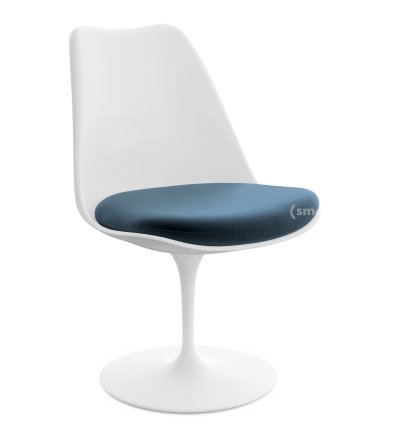
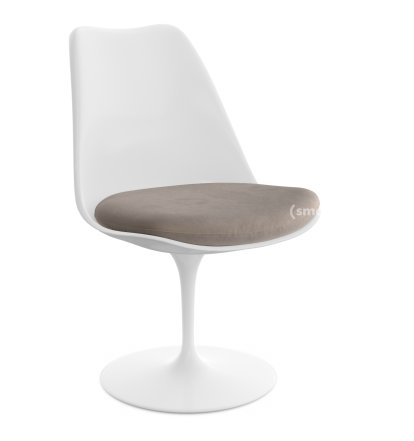
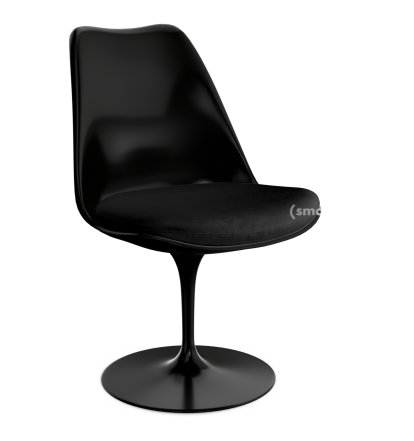
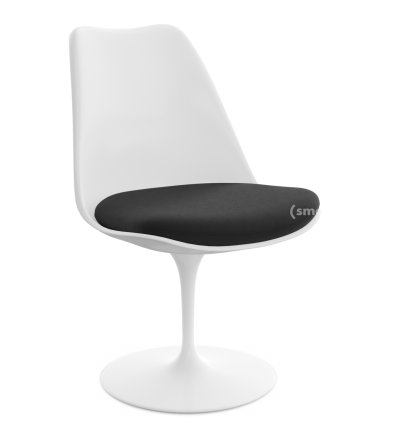
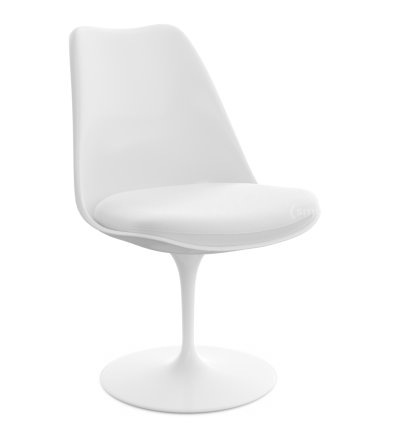
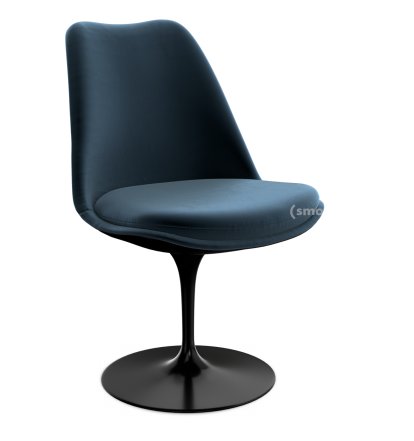
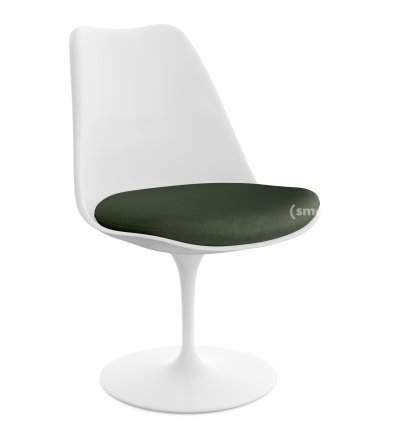
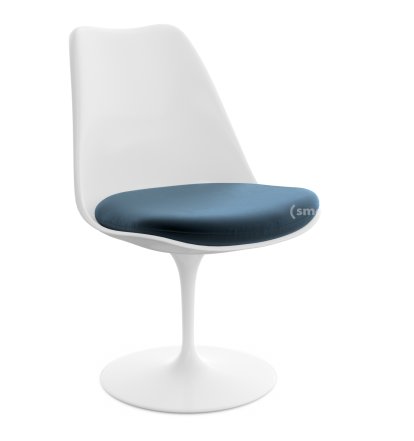
Chaise Tulip Saarinen, Rotatif, Coussin d'assise, Blanc, Night Blue (Eva 170)
a été ajouté à votre liste de favoris

Cliquez ici pour plus d’images


Détails
| Type de produit | Chaise polyvalente |
| Dimensions | Largeur : 49 cm Hauteur : 81 cm Profondeur : 53 cm Hauteur d'assise : 49 cm |
| Couleurs | Coque  Revêtement Tonus    Revêtement Eva        |
| Matériaux | Coque : matière plastique renforcée de fibres de verre Piètement : aluminium moulé par injection recouvert de plastique Coussin : tissu Tonus (90 % laine peignée, 10 % Helanca) ou Eva (100 % coton) |
| Variantes | Avec coussin d'assise ou rembourrage et coussin intégré dans la coque d'assise Pivotant au choix Disponible en de nombreuses autres couleurs et versions sur demande |
| Authenticité | Au-dessous du pied se trouvent gravés le logo "KnollStudio" et la signature d'Eero Saarinen. |
| Distinctions & Musées | MoMA, New York |
| Certificats & Durabilité | ISO 14001 (système de management environnemental) |
| Garantie | 24 mois |
| Famille de produits | Pedestal Collection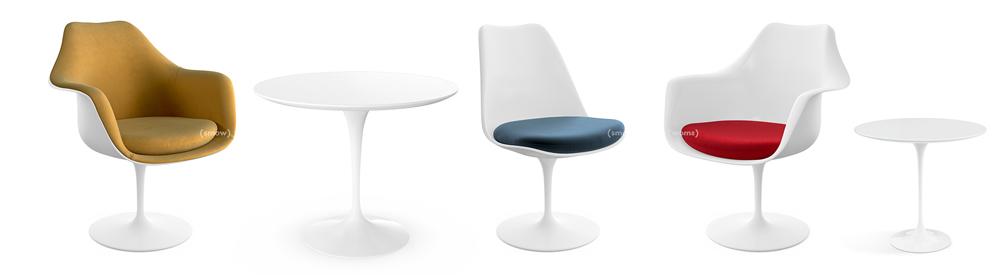 |
| Présentation produit |
Coups de coeur
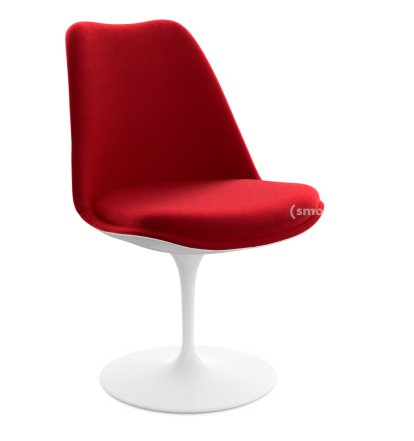
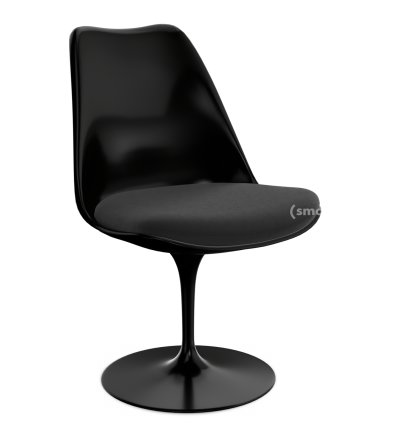
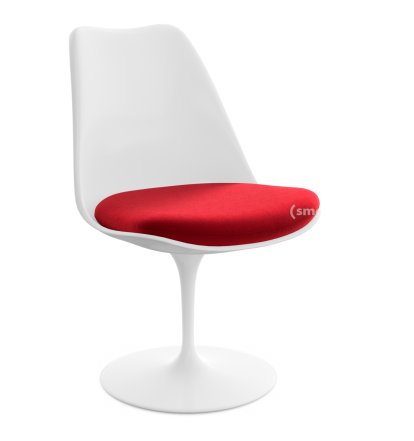
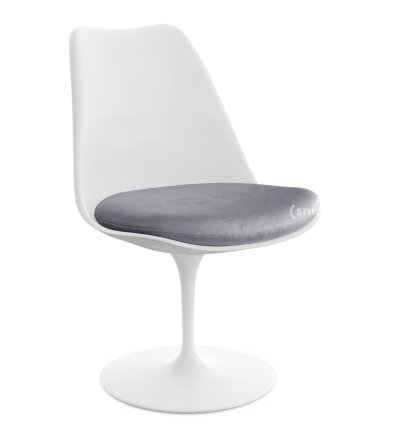
FAQ
Comment reconnaît-on une originale chaise Tulipe Saarinen Knoll International ?
Le logo Knoll et la signature du designer sont estampillés sous le piètement de la chaise.
Designer
Le designer Eero Saarinen est né en 1910 à Kirkkonummi en Finlande. Fils d'architecte, il a également étudié l'architecture à l'Université Yale de New Haven depuis 1934. Avant cela, il s'installe à Paris pour étudier la sculpture. Suite à son diplôme en architecture, il travaille avec son père, Eliel Saarinen et accepte un poste d'enseignant à l'Académie de Cranbrook au Canada. C'est là qu'il rencontre Charles Eames et qu'une des collaborations les plus fructueuses du design américain d'après-guerre se forme. Les deux ont expérimenté de nouvelles formes de meubles et ont créé leurs premiers designs à partir de contreplaqué moulé. Leur notoriété est apparue en grande partie en gagnant le concours "Organic Design in Home Furnishings" du MoMA de New York avec la Organic Chair aujourd'hui éditée par Vitra. Dès lors, Eero Saarinen a conçu de nombreux meubles. Aujourd'hui, ses créations sont majoritairement produites par le fabricant de meubles américain Knoll International et sont particulièrement célèbres. La Pedestal Collection représente une étape majeure dans l'histoire du design des années 1950.
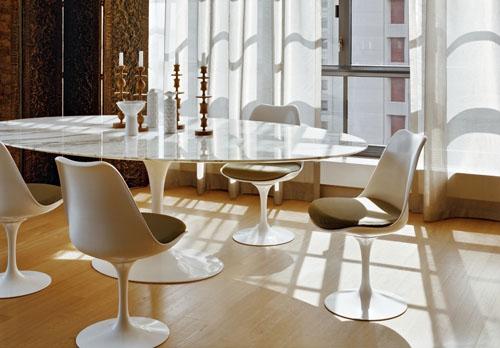
La Pedestal Collection : chaises et table Tulipe du designer Saarinen par Knoll
Fabricant
Fondé par Hans Knoll en 1938, Knoll International est aujourd’hui un éditeur de meubles avec des usines en Amérique du Nord et en Italie. Basée à l’origine à New York, l’entreprise déménage sa production au début 1950 en Pennsylvanie. Hans Knoll, décède prématurément. C’est alors sa femme, Florence Knoll, qui reprend la régence de l’entreprise. Après six ans, elle décide de se retirer du conseil administration et de n’agir qu’à titre consultatif. Aujourd’hui, Knoll propose beaucoup de produits et de services tels que « Knoll Studio » et « Knoll Office ». Knoll Studio se concentre sur la création de meubles pour l’espace domestique et public ; tandis que le Knoll Office se focalise sur des systèmes innovants de meubles et de meubles pour l’espace professionnel. Mise à part les classiques du design moderne ; telle la table Tulipe de Saarinen, les meubles de Mies van der Rohe ou la Wassily Chair de Marcel Breuer ; Knoll fabrique également un design contemporain auprès d'architectes et designers de renom, tel que Frank Gehry par exemple. Knoll dispose de nombreux exemplaires au sein d’institutions internationales de design. La collection permanente du MoMA de New York, par exemple, compte plus de 30 objets du portfolio de Knoll.

Florence Knoll, designer et entrepreneuse et son mari Hans, fondateur de Knoll International
Contexte historique
Les années d’après-guerre aux États-Unis sont définies par des changements économiques et socio-culturels. Ceux-ci ont eu un impact signifiant sur le design qu’on appelle le mouvement moderne de la moitié du siècle. Les avancées technologiques croissantes ont permis aux méthodes de production de devenir plus efficaces et d’utiliser de nouveaux matériaux et procédés. Ces développements, par exemple, jouent un rôle central dans le design d’Eero Saarinen. En effet, avec l’Organic Chair de 1940, Saarinen et Charles Eames cherchent à créer une chaise optimale pour la production en série et exploitent entre autres la mousse de polyuréthane pour le rembourrage. La table Tulipe de Saarinen est un excellent exemple de la vision des années 1950 du design américain. Vers 1960, parallèlement à l’enthousiasme de schématisation dans le design, les designers américains d’après-guerre commencent à se jouer des formes jusqu’alors simples et géométriques, presque rigides et froides. C’est dans ce contexte que Saarinen refuse l’austérité géométrique du design du Bauhaus. Il crée la table Tulipe comme une pièce expressive et sculpturale aux formes douces et organiques. Pour ce design, Saarinen réduit la table et la chaise à un pied et offre un nouveau design chaleureux et accessible. Ses créations comptent aujourd’hui parmi les classiques du design.
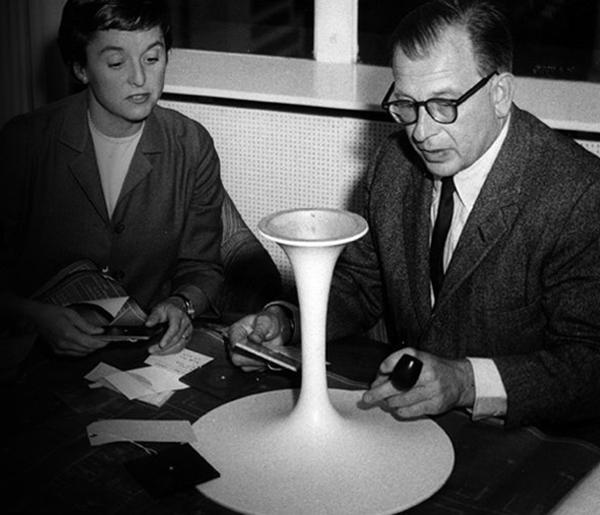
Eero Saarinen et Florence Knoll discutant sur le fameux piètement Pedestal
Le design
Le designer Eero Saarinen qui conçut la chaise Tulipe, a créé avec celle-ci la première chaise de l’histoire du meuble avec seulement un pied. Cette chaise est nommée Tulipe puisque sa silhouette rappelle la forme de la plante. Le design de Knoll fleurit avec cette assise d’une nouvelle esthétique, légère et indémodable, faisant ainsi de cet objet un classique du design. Son inventeur Eero Saarinen, architecte et designer voulait avant tout un piètement long et fin souhaitant réduire au maximum les pieds de chaise et de table. C’est ainsi qu’en plus de la chaise tulipe, il imagina aussi la table Tulipe avec un pied central. L’ensemble de la Pedestal Collection ou Collection Tulipe, dont font également partie des tables d’appoint, apporte une touche élégante organique, voire sculpturale à un intérieur. La chaise originale Tulipe d’Eero Saarinen est fabriquée par Knoll International et possède sous son pied, le logo de Knoll International, ainsi que la signature gravée du designer. En 1969, le siège Tulipe reçoit le prix de design du Museum of Modern Art de New York ainsi que le Federal Award for Industriel Design. Avec ses prix posthumes, Saarinen confirme son rôle dans l’histoire du design.
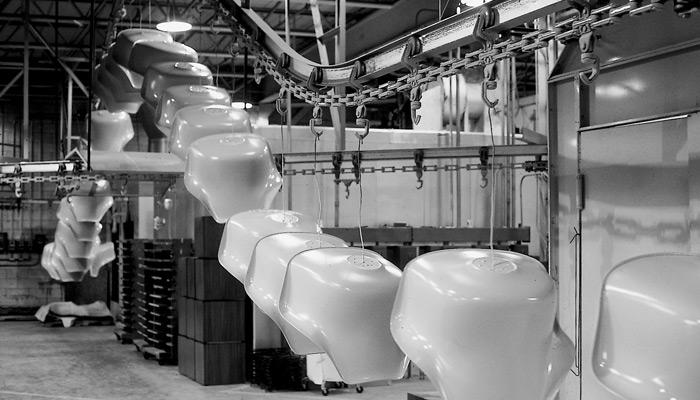
Halle de production Knoll avec la coque du fauteuil Tulipe Armchair Saarinen
Fabrication
La Pedestal Collection, incluant diverses tables et deux types de chaises, a été produite il y a plus de 50 ans par le fabricant américain de meubles Knoll International. Le piètement de la Tulipe Chaise et de la Tulipe Armchair est composé d’aluminium renforcé revêtu de Rilsan pour la solidité. Les sièges peuvent être statiques ou rotatifs. Les finitions sont en peinture noire ou blanche. Le revêtement rembourré de la coque en fibre de verre est possible de manière intégrale (dossier et surface d'assise) ou seulement du coussin d'assise. Les tissus Tonus est Eva sont disponibles en différents couleurs. D'autres tissus de revêtement sont proposés par Knoll sur demande. Les usines Knoll se trouvent dans les Nord de l’Amérique, mais aussi en Italie. Les matériaux sont sélectionnés avec soin et garantissent une très haute gamme. Durant le processus de fabrication, l’entreprise s’efforce de respecter au maximum les normes environnementales et les ressources naturelles notamment en minimisant la production de déchets industriels. L’entreprise possède un savoir-faire de plusieurs années d’expérience pour la production, mais cherche aussi des solutions innovantes pour s’adapter à l’évolution des matériaux tout en conservant le concept original.
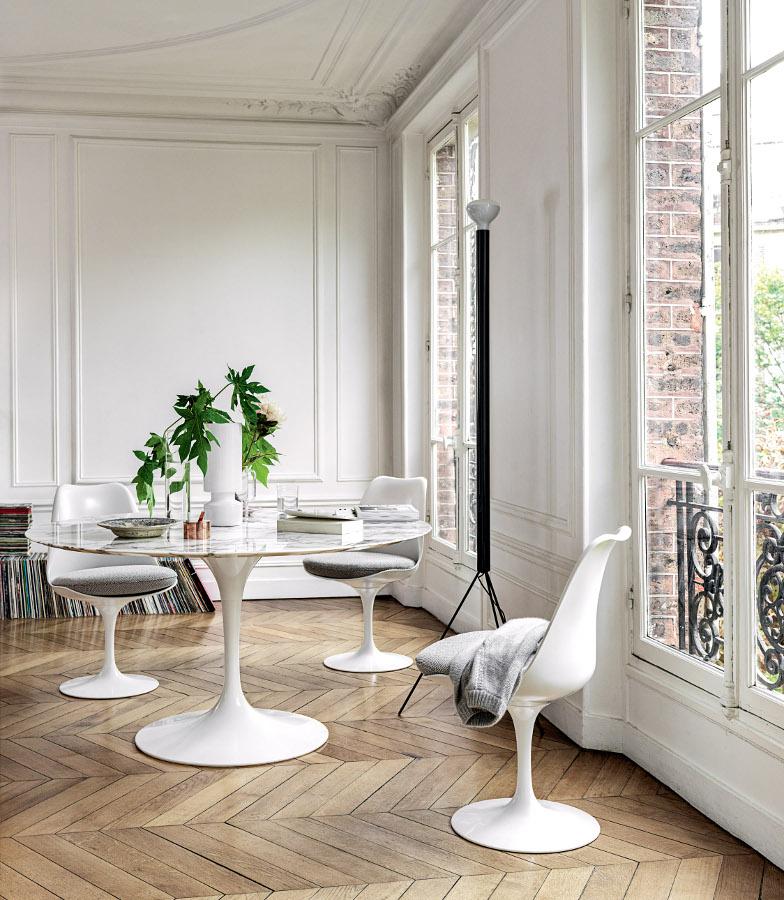
Chaises Tulipe Saarinen
Vous aimerez aussi